
I’ve been working with AI for a few years. I keep an open mind in my day to day, using a repeatability/time matrix to help me look for opportunities where it would be beneficial for me to spend time developing in AI.
Over time I’ve developed a nice collection of prompts, skills, customGPTs and projects. I realized that I had a lot of prompts that I needed only once a month or quarter. In that time I’ll admit, I’d often forget about where I’d left things. Was it a skill or a custom gpt? Where was the chat I used last time? Was this going to do both things I needed or did I set this up for just the first action?
I started looking into ways to document my processes and pulling those tactic documents into AI so that it was easier to reference what had been setup and make sure that it was easier to be consistent after a gap in usage. I also had an issues where some steps in my process required that I used custom gpts and templates that were managed by someone else. I couldn’t pull their data into my projects without losing access to their updates.
The Orchestrator
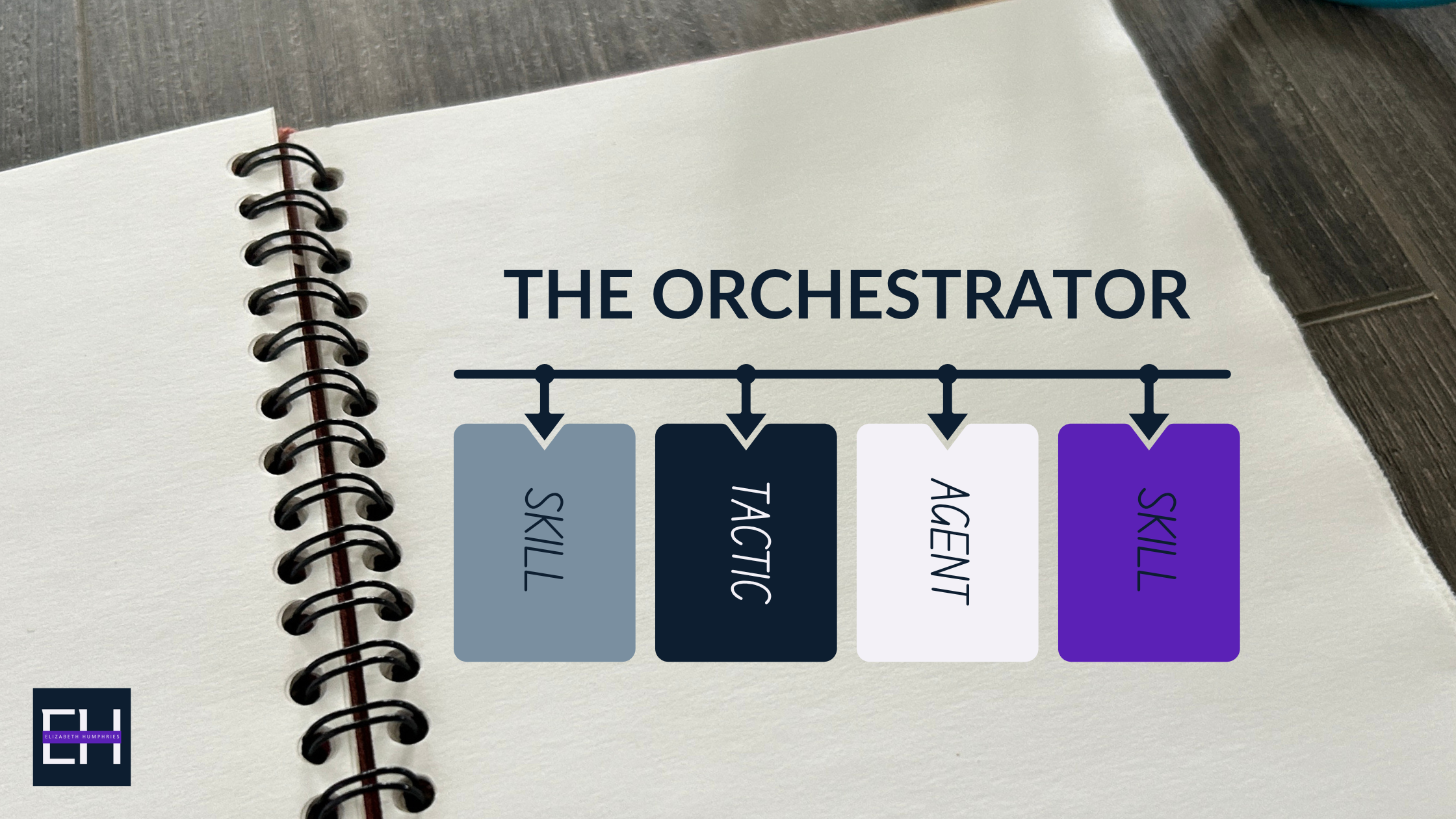
Where AI really starts to become an advantage is not in doing individual tasks but when they all start connecting to form real systems. Part of the issue that I always had in trying to implement the AI workflow frameworks that I’d seen was that I didn’t control all my variables and my systems may not all be connected. So my process was a piecemeal of automatic steps mixed in with manual steps that I had to remember to do in a separate place. I needed a way to oversee these different tactics and drive them together. An Orchestrator that knows the overall strategy for a process area and knows how and when to engage each tactic document, skill or GPT.
I like to think of the Orchestrator as my department head. They know who on the “team” is supposed to do what. They know all the steps that have to happen and how it all comes back together. They provide a final check to ensure that the final deliverables align with the original goals and strategies.
The great part is that because my orchestrators are skills, it doesn’t matter what I’m doing, I can call on them without having to do the work of going to a specific chat or trying to remember where to go to access them
Reducing Friction
My orchestrator solution solves the 3 important features that I use when developing a process.
First, It has to be extremely easy to get started. In this instance I have eliminated the need to search around to a different project or chat. I can start this anywhere but just entering into a chat that I want to work on the item that this orchestrator handles.
Second, it must be easy to move between the steps. The biggest issue with manual processes is that the responsibility is on the user to ensure they check all the boxes. In theory this is no problem but get into a busy last day of a deadline or get interrupted by a call from your CMO with an urgent need and all bets are off whether you’ve checked everything off.
Finally it has to be easy to modify. Things change, organizations grow, people gain new skills and efficiencies if your process can’t be easily modified to keep up then you force your users to stop using it or worse yet, know when you use part of it and try and remember when they need to skip it for the new requirements. Skills are as easy to change as telling it you want to make a change or make a change to the tactic document. They can change as often as you need them to
Building my AI workflows this way has freed me from spending time and energy remembering every step, checking all the boxes and ensuring that my outputs are consistent. It’s the sweet spot between consistency and ease without giving up control. Since I’ve programmed my orchestrator I know it’s doing things the way I want them done and I can spend my time making what I produce better.