I write about visibility, influence, and how to make your impact legible to the people inside your organization that matter.
I’m Elizabeth Humphries, a marketing visibility strategist and the writer behind Market Your Marketing. Twenty years in B2B marketing taught me one thing: good work doesn’t speak for itself. Now I help marketers fix that.
Often, we look for results too soon, jump to a different activity to stay busy, or even let the priorities of others dominate our time.
Here are three things I do to maintain alignment at the busiest of times:
1️⃣ Write it all down. I create an informal strategy with notes, random thoughts, and prioritization. It’s for my eyes only and serves as a reference when I’m juggling too many different things and need to get back to my strategic self quickly.
2️⃣ Schedule time weekly to review my progress toward goals. Regular reminders of my goals and strategies and tracking help me avoid veering too far off course and ensure I’m prepared to update others.
3️⃣ Daily retrospect. How did I spend my day? How did my activity move my team toward our goals? Looking back on the prior day helps me prioritize work going forward and create accountability for aligning resources (my time) with the output I’m responsible for.
Do you have a trick or tip to help you stay aligned with your goals?
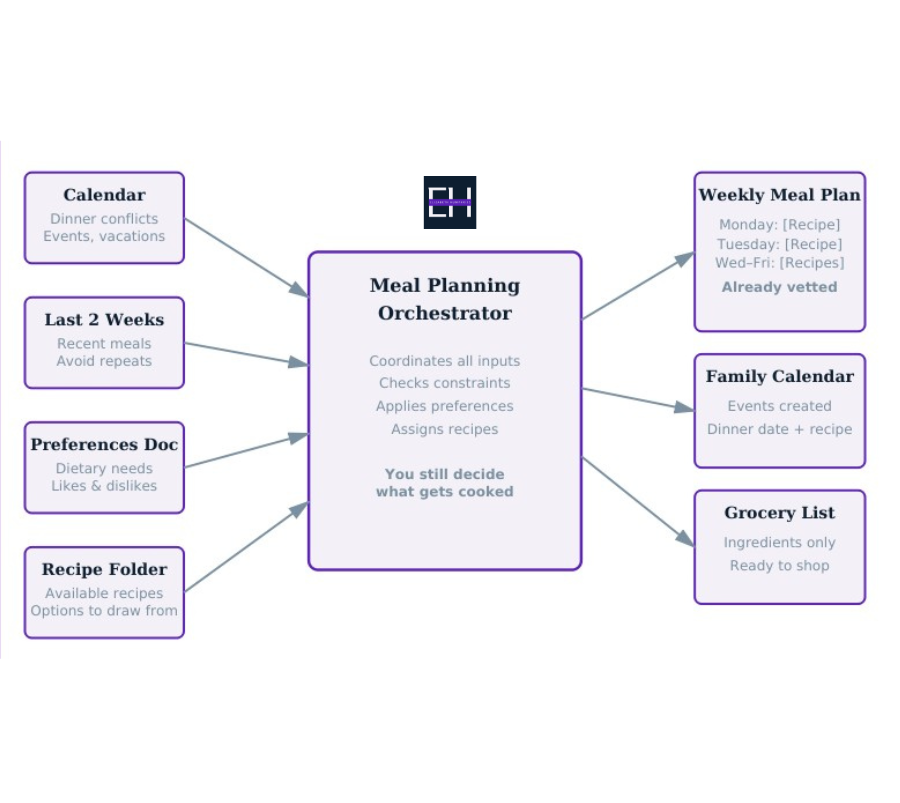
I have an orchestrator that handles our weekly dinner plan.
When I tell it to plan the week (Easy to start), it pulls from four places: my calendar for dinner conflicts, the last two weeks of meals so we don’t repeat what we just had, a Google Drive doc with dietary restrictions and what people actually like to eat, and a recipe folder with options. It takes all of that, applies the constraints, and returns a weekly plan with recipes assigned to specific nights, plus a grocery list (Easy to move between steps).
Those data sources are mine to update. When I find a new recipe, I add it to the folder. When nutrition priorities shift or one of my kids changes what they’re willing to eat, I update the preferences doc. The orchestrator isn’t learning or retraining. It’s reading what’s there and adjusting based on that. (Easy to change)
I still decide if the plan works for the week. I still shop. I still cook (unless I can get someone else to, hence the recipe in the calendar). But I’m not holding four different data sources in my head, checking the calendar, then my notes, then digging through folders. The orchestrator handled that.